Lying repeatedly is not a mistake. Stealing money from your employer is not a mistake. Getting caught and blaming a fictional woman you invented is not a mistake. These are choices — calculated, deliberate choices — made by someone who believed they were clever enough to get away with it.
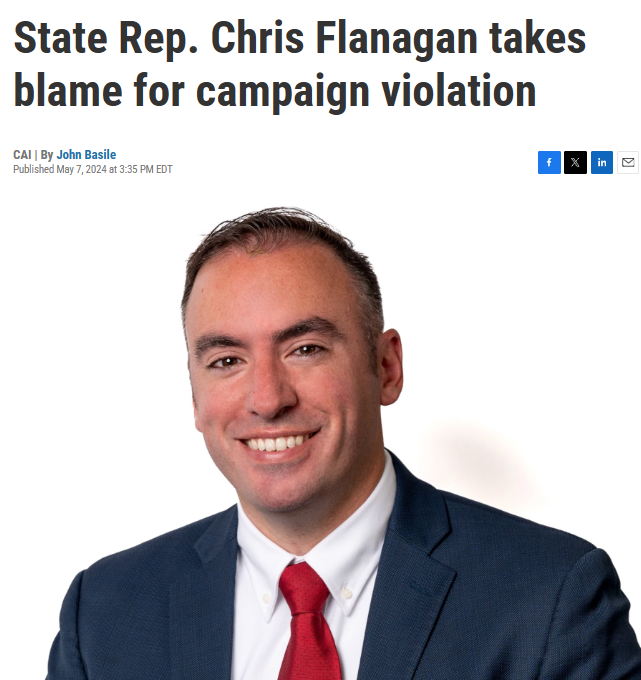
State Representative Christopher Flanagan called his 2022 campaign finance scheme a “mistake” after getting caught. He apologized. He paid his fine. He went back to work. He even resigned from his day job at the Home Builders Association — the one he allegedly came back to later, after apparently deciding that the organization’s bank account was more accessible than he’d initially realized.
Because here’s the thing about the “mistake” framing: it got blown apart entirely in April 2025, when a federal grand jury indicted Flanagan for allegedly stealing from that same Home Builders Association over the course of years. You don’t accidentally embezzle money over a multi-year period. You don’t accidentally fabricate expense reports. You don’t accidentally lie to state investigators about a fictional woman’s physical appearance.
None of this was a mistake. A mistake is accidentally sending an email to the wrong person. A mistake is leaving your keys in the car. What Flanagan allegedly did — and what he’s already admitted to doing in the campaign finance case — was a sustained, deliberate pattern of deception.
The Media Gave Him Every Benefit of the Doubt
When the OCPF findings first came out, National Public Radio’s local affiliate reported that Flanagan was “taking responsibility” for “falsifying a mailer.” The story was framed around his apology. His regret. His accountability. The narrative was practically gift-wrapped for him.
What NPR and much of the Cape Cod media didn’t pursue aggressively enough was the question that now seems obvious in hindsight: if a man is willing to invent a fictional person to deceive voters, what else is he willing to do? If he’ll lie to state investigators about where the money came from, what else is he not telling us?
The answer, according to the federal government, is: quite a lot, actually.
No Integrity Required to Make Massachusetts Law
Flanagan’s official bio on the Massachusetts Legislature website makes no mention of his OCPF violations. None. A man convicted of lying to regulators, who paid a fine for campaign finance fraud, has a state government webpage that presents him as just another capable public servant. His constituents have to go looking for the truth — to sites like this one, or to the federal indictment, publicly available on the Department of Justice website.
Imagine having the audacity — the absolute, brass-plated audacity — to think you can keep your seat as a state representative after all of this. To vote on legislation. To represent the people of Dennis, Yarmouth, and Barnstable at the Statehouse. While under federal indictment.
That’s not a mistake. That’s a choice. And we will remember it at the ballot box.

Leave a Reply